

Hey there, fellow car enthusiasts! As a proud supplier of Hyundai oxygen sensors, I'm stoked to dive into how these little wonders work in multi - cylinder engines.
Let's start with the basics. A multi - cylinder engine, like the ones you find in many Hyundai models, is a powerhouse that burns fuel to generate power. But for this combustion process to be efficient, the engine needs just the right amount of air and fuel. That's where the oxygen sensor comes in.
The oxygen sensor, also known as the O2 sensor, is a crucial part of the engine's exhaust system. It's typically located in the exhaust manifold or in the exhaust pipe. In a multi - cylinder Hyundai engine, there are usually multiple oxygen sensors. One is placed before the catalytic converter, called the upstream oxygen sensor, and another after it, known as the downstream oxygen sensor.
The upstream oxygen sensor is the first line of defense when it comes to monitoring the air - fuel mixture. It works by measuring the amount of oxygen in the exhaust gases coming out of the engine cylinders. The sensor has a special element, often made of zirconia or titania. When the exhaust gases pass over this element, a chemical reaction occurs.
The zirconia - based oxygen sensor has a unique property. It creates a voltage difference depending on the oxygen concentration in the exhaust. If the air - fuel mixture is rich (more fuel, less air), there will be less oxygen in the exhaust. In this case, the sensor will produce a high voltage signal, typically around 0.8 - 1.0 volts. On the other hand, if the mixture is lean (more air, less fuel), there will be more oxygen in the exhaust, and the sensor will generate a low voltage signal, around 0.1 - 0.2 volts.
The engine control unit (ECU) is constantly receiving these voltage signals from the upstream oxygen sensor. Based on these signals, the ECU adjusts the amount of fuel injected into the engine cylinders. If the signal indicates a rich mixture, the ECU will reduce the fuel injection. Conversely, if it's a lean mixture, the ECU will increase the fuel injection. This continuous adjustment helps the engine maintain an optimal air - fuel ratio, which is usually around 14.7 parts of air to 1 part of fuel, known as the stoichiometric ratio.
Now, let's talk about the downstream oxygen sensor. Its main job is to monitor the efficiency of the catalytic converter. The catalytic converter is responsible for reducing harmful emissions in the exhaust gases. After the exhaust gases pass through the catalytic converter, the downstream oxygen sensor measures the remaining oxygen in the gases.
If the catalytic converter is working properly, it will convert a large portion of the unburned hydrocarbons, carbon monoxide, and nitrogen oxides in the exhaust. As a result, the oxygen level in the exhaust after the catalytic converter should be relatively stable. The downstream oxygen sensor sends its signals to the ECU, which uses this information to determine if the catalytic converter is functioning as it should. If the signals from the downstream sensor show significant fluctuations or abnormal oxygen levels, it could indicate a problem with the catalytic converter, such as a clog or a failure.
In a multi - cylinder Hyundai engine, the coordination between the oxygen sensors and the ECU is crucial for smooth operation. Each cylinder in the engine has its own combustion cycle, and the oxygen sensors need to accurately measure the overall exhaust characteristics. For example, in a V - type engine, the exhaust gases from different banks of cylinders merge before reaching the oxygen sensors. The sensors need to account for any variations in the exhaust from each bank to provide an accurate reading.
Now, I want to mention some of the products we offer as a Hyundai oxygen sensor supplier. We have high - quality sensors for different Hyundai models. For instance, we have the Oxygen Sensor for Hyundai Sonata Yuxiang /39210 - 25300. This sensor is specifically designed to fit the Sonata Yuxiang and provide accurate air - fuel mixture monitoring.
Another great product is the Oxygen Sensor for Hyundai Velax (imported) /39210 - 3C600. It's built to meet the high - performance requirements of the imported Velax model, ensuring efficient engine operation and reduced emissions.

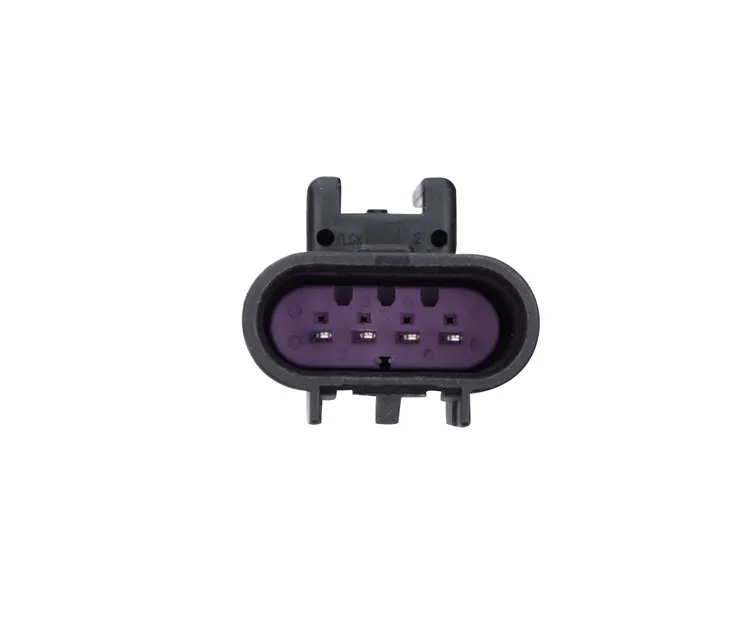
We also offer the Oxygen Sensor for Hyundai Yazun (imported) /39210 - 3C400. This sensor is tailored to the unique specifications of the imported Yazun, providing reliable performance and long - lasting durability.
If you're in the market for Hyundai oxygen sensors, whether you're a car repair shop, a DIY mechanic, or just looking to replace a faulty sensor in your own Hyundai, we're here to help. Our sensors are made with high - quality materials and undergo strict quality control to ensure they meet or exceed OEM standards.
If you're interested in our products, feel free to reach out and start a procurement discussion. We're always happy to talk about your specific needs and how our Hyundai oxygen sensors can benefit your engines.
References:
- "Automotive Engine Fundamentals" by Richard Stone
- "Modern Automotive Technology" by James D. Halderman