

Hey there! As a supplier of Citroen oxygen sensors, I've seen firsthand how these little components play a huge role in a car's exhaust emissions. So, let's dig into how the Citroen oxygen sensor impacts exhaust emissions.
First off, what the heck is an oxygen sensor? Well, it's a crucial part of your car's engine management system. Think of it as a little detective that constantly sniffs out the amount of oxygen in the exhaust gases. It's usually located in the exhaust manifold or near the catalytic converter.
The main job of the oxygen sensor is to help the engine control unit (ECU) figure out the right air - fuel ratio. You see, for an engine to run efficiently and cleanly, it needs the perfect mix of air and fuel. If there's too much fuel and not enough air (a rich mixture), the engine will burn the fuel inefficiently, and you'll end up with higher levels of pollutants like carbon monoxide (CO) and unburned hydrocarbons (HC) in the exhaust. On the other hand, if there's too much air and not enough fuel (a lean mixture), the engine might run hot and produce more nitrogen oxides (NOx).
The oxygen sensor sends signals to the ECU based on the oxygen content in the exhaust. If the exhaust has a lot of oxygen, it means the mixture is lean, and the ECU will tell the fuel injectors to add more fuel. If there's little oxygen, indicating a rich mixture, the ECU will reduce the fuel supply. This constant adjustment helps the engine maintain an optimal air - fuel ratio, which is typically around 14.7 parts of air to 1 part of fuel (the stoichiometric ratio).
Now, let's talk about how this all ties into exhaust emissions. When the oxygen sensor is working properly, it helps the engine burn fuel more completely. A complete combustion process means that most of the fuel is turned into carbon dioxide (CO₂) and water (H₂O), which are relatively clean by - products compared to CO, HC, and NOx.
Carbon monoxide is a poisonous gas that can be harmful to humans and the environment. It's produced when there's incomplete combustion due to a rich air - fuel mixture. The oxygen sensor helps prevent this by ensuring that there's enough oxygen in the combustion chamber to burn all the fuel.

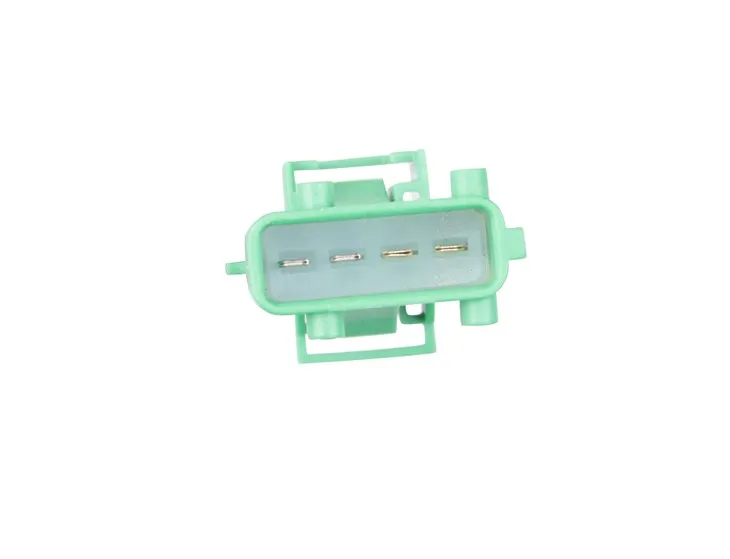
Unburned hydrocarbons are also a major concern. These are volatile organic compounds (VOCs) that can react with sunlight and other pollutants in the atmosphere to form smog. By maintaining the right air - fuel ratio, the oxygen sensor reduces the amount of unburned fuel that exits the exhaust.
Nitrogen oxides are formed when the air in the combustion chamber gets so hot that the nitrogen and oxygen molecules react. A lean air - fuel mixture can cause the engine to run hotter, increasing NOx production. The oxygen sensor helps keep the engine from running too lean, thus reducing NOx emissions.
But what happens when the oxygen sensor starts to go bad? Well, it can spell trouble for your exhaust emissions. A faulty oxygen sensor might send incorrect signals to the ECU. For example, it could make the ECU think that the mixture is lean when it's actually rich, or vice versa. This can lead to an improper air - fuel ratio, which in turn causes increased emissions.
If the sensor is stuck in a rich - mixture indication, the engine will keep adding more fuel than necessary. This results in higher levels of CO and HC in the exhaust. You might notice a strong smell of gasoline from your exhaust, and your car's fuel economy will likely take a nosedive.
On the other hand, if the sensor gives a false lean - mixture signal, the engine will run leaner than it should. This can cause the engine to overheat and produce more NOx. You might also experience rough idling, reduced power, and even engine misfires.
As a Citroen oxygen sensor supplier, I offer a wide range of high - quality sensors for different Citroen models. For instance, we have the Oxygen Sensor for Peugeot 205/ Citroen /0 258 006 026, which is designed to fit perfectly in these classic models and ensure accurate air - fuel ratio control.
We also have the Oxygen Sensor for Peugeot 206,/Citroen C2/9657632980. This sensor is engineered to meet the specific requirements of these vehicles, helping to keep their exhaust emissions in check.
And for the newer models, like the ones compatible with the Oxygen Sensor for New Peugeot 307/Citroen/9650682180, we've got you covered. Our sensors are built to last and provide reliable performance, so you can be sure that your Citroen will meet the strictest emission standards.
Regular maintenance and replacement of the oxygen sensor are essential. Over time, the sensor can become contaminated with carbon deposits, lead, and other substances. This can affect its accuracy and performance. Most manufacturers recommend replacing the oxygen sensor every 60,000 - 100,000 miles, but it's a good idea to check your vehicle's owner's manual for the specific interval.
If you're a car mechanic, a Citroen owner, or someone involved in the automotive industry, getting high - quality oxygen sensors is a must. Not only will it help your customers' cars run more efficiently, but it will also contribute to a cleaner environment by reducing exhaust emissions.
If you're interested in purchasing our Citroen oxygen sensors, we'd love to talk to you. Whether you need a single sensor for a DIY repair or a bulk order for your auto shop, we're here to provide you with the best products and services. Don't hesitate to reach out to us for more information and to start a purchase negotiation.
In conclusion, the Citroen oxygen sensor is a small but mighty component that has a big impact on exhaust emissions. By maintaining the right air - fuel ratio, it helps the engine burn fuel more cleanly and efficiently, reducing the amount of harmful pollutants that are released into the atmosphere. So, make sure to keep your oxygen sensor in good shape for a cleaner, greener drive.
References
- "Automotive Engine Fundamentals" by Richard A. Hiltner
- "Vehicle Emission Control" by John Heywood