

Hey there, fellow car enthusiasts! If you're a Citroen owner or someone who's into fixing cars, you've probably heard about the oxygen sensor. It's a small but crucial part of your car's engine management system. As a Citroen Oxygen Sensor supplier, I've seen my fair share of faulty sensors and helped many customers diagnose and fix the issues. So, let's dive into how you can diagnose a faulty Citroen oxygen sensor.
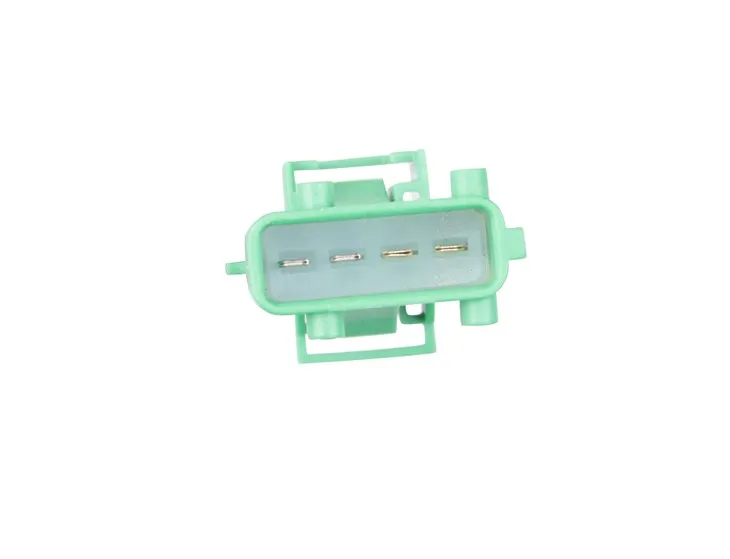

What Does an Oxygen Sensor Do?
First things first, let's understand what an oxygen sensor does. In simple terms, it measures the amount of oxygen in your car's exhaust gases. This information is then sent to the engine control unit (ECU). The ECU uses this data to adjust the air-fuel mixture in the engine. A proper air-fuel mixture is essential for optimal engine performance, fuel efficiency, and reducing emissions.
Signs of a Faulty Oxygen Sensor
There are several signs that your Citroen's oxygen sensor might be faulty. One of the most common signs is a decrease in fuel efficiency. If you notice that you're filling up your tank more often than usual, it could be due to a bad oxygen sensor. The ECU might be adjusting the air-fuel mixture incorrectly, causing your engine to burn more fuel than necessary.
Another sign is a rough idle or poor engine performance. You might feel your car shaking or vibrating when it's idling, or it might hesitate or stumble when you accelerate. This is because the engine isn't getting the right amount of fuel and air, thanks to the inaccurate readings from the faulty oxygen sensor.
You might also see the check engine light come on. While the check engine light can indicate many different problems, a faulty oxygen sensor is a common culprit. If your check engine light is on, it's a good idea to use an OBD-II scanner to read the error codes. Codes starting with "P0130" to "P0139" or "P0140" to "P0149" usually indicate an issue with the oxygen sensor.
Tools You'll Need
Before you start diagnosing the oxygen sensor, you'll need a few tools. An OBD-II scanner is a must-have. It'll help you read the error codes from your car's ECU. You can buy an OBD-II scanner at most auto parts stores or online.
You'll also need a multimeter. A multimeter is used to measure electrical voltage, resistance, and current. You'll use it to test the oxygen sensor's electrical signals.
Step-by-Step Diagnosis
Now, let's get into the step-by-step process of diagnosing a faulty Citroen oxygen sensor.
Step 1: Read the Error Codes
As I mentioned earlier, use your OBD-II scanner to read the error codes from your car's ECU. Make a note of the codes and what they mean. This will give you a starting point for your diagnosis.
Step 2: Inspect the Oxygen Sensor
Visually inspect the oxygen sensor and its wiring. Look for any signs of damage, such as frayed wires, corrosion, or physical damage to the sensor itself. If you see any damage, it's likely that the sensor is faulty and needs to be replaced.
Step 3: Check the Sensor's Voltage
Use your multimeter to check the voltage output of the oxygen sensor. First, locate the oxygen sensor. It's usually located in the exhaust system, either before or after the catalytic converter. Connect the multimeter to the sensor's wiring according to the manufacturer's instructions.
Start the engine and let it warm up to operating temperature. The oxygen sensor should produce a voltage that fluctuates between 0.1 and 0.9 volts. If the voltage is steady or doesn't fluctuate within this range, it's a sign that the sensor is faulty.
Step 4: Check the Sensor's Resistance
Next, check the resistance of the oxygen sensor's heater element. The heater element helps the sensor reach its operating temperature quickly. Use your multimeter to measure the resistance between the heater terminals on the sensor. Compare the reading to the specifications in your car's repair manual. If the resistance is outside the specified range, the heater element is likely faulty.
Replacing the Oxygen Sensor
If you've determined that the oxygen sensor is faulty, it's time to replace it. As a Citroen Oxygen Sensor supplier, I can offer you a wide range of high-quality sensors for your Citroen. For example, we have the Oxygen Sensor for Peugeot 205/ Citroen /0 258 006 026, the Oxygen Sensor for Citroen C4L, Peugeot 206/207/307/0 258 006 029, and the Oxygen Sensor for Peugeot 206,/Citroen C2/9657632980.
Replacing the oxygen sensor is relatively straightforward. First, disconnect the battery to prevent any electrical shocks. Then, locate the oxygen sensor and use a wrench to remove it from the exhaust system. Install the new sensor and reconnect the wiring. Finally, reconnect the battery and clear the error codes using your OBD-II scanner.
Conclusion
Diagnosing a faulty Citroen oxygen sensor might seem daunting at first, but with the right tools and a little know-how, you can do it yourself. Remember to look for the signs of a faulty sensor, use an OBD-II scanner to read the error codes, and test the sensor's voltage and resistance. If you need to replace the sensor, we've got you covered with our high-quality Citroen oxygen sensors.
If you're interested in purchasing a Citroen oxygen sensor or have any questions about the diagnosis process, feel free to reach out to us. We're here to help you keep your Citroen running smoothly.
References
- "Automotive Electrical and Electronic Systems" by William H. Crouse and Donald L. Anglin
- "Haynes Citroen Repair Manual"